
The Domestic Abuse Commissioner’s New Report, and EdShift’s Response.
The Domestic Abuse Commissioner for England and Wales has released a landmark report titled “Victims in their own right? Babies, children, and young people’s experience of domestic abuse.” This powerful report calls for a systemic shift in how society recognises and supports children affected by domestic abuse. It urges all stakeholders to acknowledge that children are not just witnesses to abuse, but victims in their own right. The Domestic Abuse Commissioner is an independent public office established under the Domestic Abuse Act 2021.
Its role is to monitor, influence, and improve the responses to domestic abuse across the UK. Led by Nicole Jacobs, the Commissioner’s office acts as a national advocate for survivors, holding public bodies and services to account and pushing for real, long-lasting change.
The Context of the report
The report seeks to radically shift how children and young people are viewed within domestic abuse services. Rather than being passive observers of abusive environments, the report urges policymakers, practitioners, and service commissioners to recognise that children suffer harm directly, and must therefore be supported as individuals with their own needs. The report explores how services currently engage with children, from prevention and early intervention to crisis response and long-term recovery. It makes the case that the system is currently failing many children and young people, through gaps in provision, lack of specialist training, and inconsistent safeguarding practices. It outlines actionable steps for improvement, aiming to catalyse investment in prevention and support mechanisms and to improve recognition and response across all agencies children may encounter.
Listening to Children: The “Tell Nicole” Framework
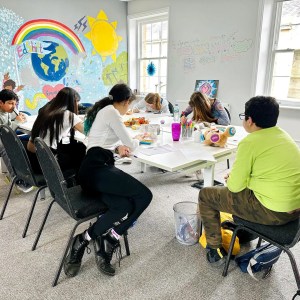
To ensure the report reflected lived experiences, the Domestic Abuse Commissioner’s Office piloted “Tell Nicole”, a framework co-developed with eight partner organisations to engage children directly. More than 100 children took part, using creative tools like posters, artwork, and written responses to share what they needed when facing domestic abuse at home. Their messages were clear and compelling. They want to be listened to, believed, treated with respect, and offered support that acknowledges their trauma. Children pointed out that adults often misunderstand or underestimate the depth of harm they experience and may have unrealistic expectations about their behaviour in the aftermath of abuse.
Main Theme’s from “Tell Nicole”
Children spoke clearly and powerfully about what they need in the face of domestic abuse. First and foremost, they want recognition, a basic understanding of what domestic abuse looks like, especially in its non-physical forms, and clear guidance on who they can turn to for help. They emphasised the importance of safe, supportive spaces where they can speak freely and be met with empathy, not judgment. But too often, children are held back by barriers, fear of not being believed, previous negative experiences when seeking help, and a lack of control over how their personal stories are shared. Schools, they said, are vital, not just in spotting the signs early, but in supporting long-term recovery. Children want domestic abuse education to be part of everyday learning, delivered by trained specialists who truly understand the topic, rather than regular classroom teachers.
The Commissioner’s Recommendations: Seven Themes for Change
The report sets out bold, practical recommendations that challenge services to listen more deeply and act more collaboratively. Each recommendation is a blueprint for building a more compassionate, coordinated, and effective response, grounded in the voices of children and the realities of service delivery. The Commissioner’s recommendations are grouped under seven core themes:
- Centring Children’s Voices
A central thread throughout the report is the importance of listening to children, not just passively, but as active participants in shaping the decisions that affect their lives. The report calls on services to involve children and their non-abusive parents or carers in every stage of service delivery, from design to implementation. Their perspectives must not be seen as secondary or supplementary. Children reported that they often feel unheard, or that their needs are misunderstood by adults with unrealistic expectations about how trauma should manifest. The message is clear: children want to be listened to, respected, and believed.
- Stronger Cross-Departmental Working and Strategic Leadership
Domestic abuse cuts across multiple sectors, education, health, policing, and social care. The report calls for stronger leadership and coordination between these departments to provide consistent and effective support to child victims. Children need to know how to identify abuse, understand that it’s not always physical, and know who they can safely talk to. When departments work in silos, those opportunities for awareness, identification, and intervention are easily missed.
- Holistic Funding
A statutory duty to fund community-based domestic abuse services is urgently needed. Children must have timely access to support that is trauma-informed and designed specifically for their age and situation. The report recommends investment in specialist domestic abuse support within healthcare settings and the wider community. Current funding is often fragmented and short-term, making it difficult for services to respond effectively to children’s needs.
- Data and Evidence
The lack of consistent, detailed data hampers service design and delivery. Better data collection and sharing are essential to ensure timely and equitable access to support. Without this data, there’s a risk that children in some areas receive excellent support, while others fall through the cracks entirely. Government could make things better for children by ensuring that availability of support services is consistent across the country, quick for children who need them, and suitable for children with differing needs.
- Specialist Training for Frontline Professionals
Every frontline professional who may interact with children should have access to specialist training on domestic abuse and its impact on children. This includes recognising that a child’s experience may differ from their parents’, and that they may not be ready or able to share everything at once. Children consistently expressed a desire for adults to better understand the trauma they have experienced, and to treat them with patience, respect, and empathy.
- Safeguarding
While safeguarding frameworks are well-established, the report identifies a need for roles that are more specialised and responsive to domestic abuse. Recommendations include the introduction of Education Domestic Abuse Advisor roles within Local Safeguarding Children Partnerships and expanding capacity within Child and Adolescent Mental Health Services (CAMHS). This would help ensure that mental health professionals can understand and respond effectively to the unique needs of child victims of domestic abuse.
- Ensuring Practice Is Informed by Specialists
The report emphasises that support must be informed by domestic abuse specialists who are skilled in working with children and young people. These workers should be co-located in children’s social care, family help, and protection teams, ensuring that advice, support and referrals are rooted in specialist understanding of abuse and trauma. Children must be offered meaningful choice over the type of support they receive, whether group-based or one-to-one, short-term or long-term, and where and how they receive it.

EdShift’s Response to the Domestic Abuse Commissioner’s “Victims in Their Own Right?” Report
In response to the Domestic Abuse Commissioner’s landmark report, the EdShift team came together to reflect on the recommendations and explore how we can embed these insights into our practice and strategic direction. Central to our discussion was a reaffirmation of our commitment to placing children at the heart of domestic abuse interventions, not just as witnesses but as survivors in their own right. A key theme was the importance of integrating behaviour change programmes for perpetrators alongside child-focused interventions. EdShift emphasise that this dual approach sends a powerful message to children, that they are not responsible for the abuse and deserve safety and healing. This principle is already reflected in our Commissioning Framework and our involvement in the Kirklees Steering Group under the Safe and Together model. The team also explored how to better leverage our presence on strategic boards to advocate for child survivors. We are committed to using data, frontline insights, and real stories to influence systems and amplify children’s voices across social media and governance structures.
In line with the report’s recommendation for flexible local funding, EdShift want to highlight our transition from a Community Interest Company (CIC) to a Charitable Incorporated Organisation (CIO). This change will enhance transparency, increase access to funding, and boost our capacity to meet the evolving needs of young people. Therapeutic support for children was identified as a non-negotiable priority. EdShift reaffirm this support as a central part in our service delivery and pledge to embed this further into programme bids and partnership conversations. We also acknowledge the need to reflect more clearly in our branding and communications that children are victims in their own right. This includes shifting terminology to “child survivors” and actively partnering with the Commissioner’s Office to support wider cultural change.
We recognise expanding partnerships, particularly with the health sector, as another area of focus. While EdShift has strong school relationships, we recognise the need to engage local Integrated Care Boards (ICBs) to integrate work more broadly. We also plan to enhance our early intervention resources, such as the SpotLight booklet, with more psychoeducation content related to healthy relationships.
Internally, EdShift is looking to evolve its data and evaluation tools to better reflect children’s lived experiences, including exploring creative formats like audio-image recordings. We are also committed to improving inclusivity, particularly for LGBTQ+ children and boys. Steps include formalising partnerships, improving gender identity data collection, and making our digital and physical spaces more visibly inclusive.
Conclusion: A Call to Action and a Call for Change
The “Victims in their own right?” report is a bold and necessary step in recognising the full impact of domestic abuse on children and young people. Its recommendations are ambitious, but grounded in what children themselves have said they need to feel safe, understood, and supported. The report is a blueprint for how the UK can reimagine its response to children affected by domestic abuse, from the classroom to the courtroom, from healthcare to housing. It demands awareness and action. It urges better funding, more specialist support, and a fundamental respect for the rights and voices of children.
The message from the Commissioner is clear: children must no longer be treated as mere witnesses to abuse, they are victims who deserve recognition, protection, and agency. This report challenges us all, government, professionals, and society, to ensure that children’s rights and voices are at the heart of our response to domestic abuse.
EdShift sees this report as a call to action and a call for change. We are embedding its findings across our funding strategy, programme design, and communications, ensuring alignment with national priorities while remaining grounded in the voices of children.

You must be logged in to post a comment.